Hand-Picked Coffee: Why the Harvest Matters
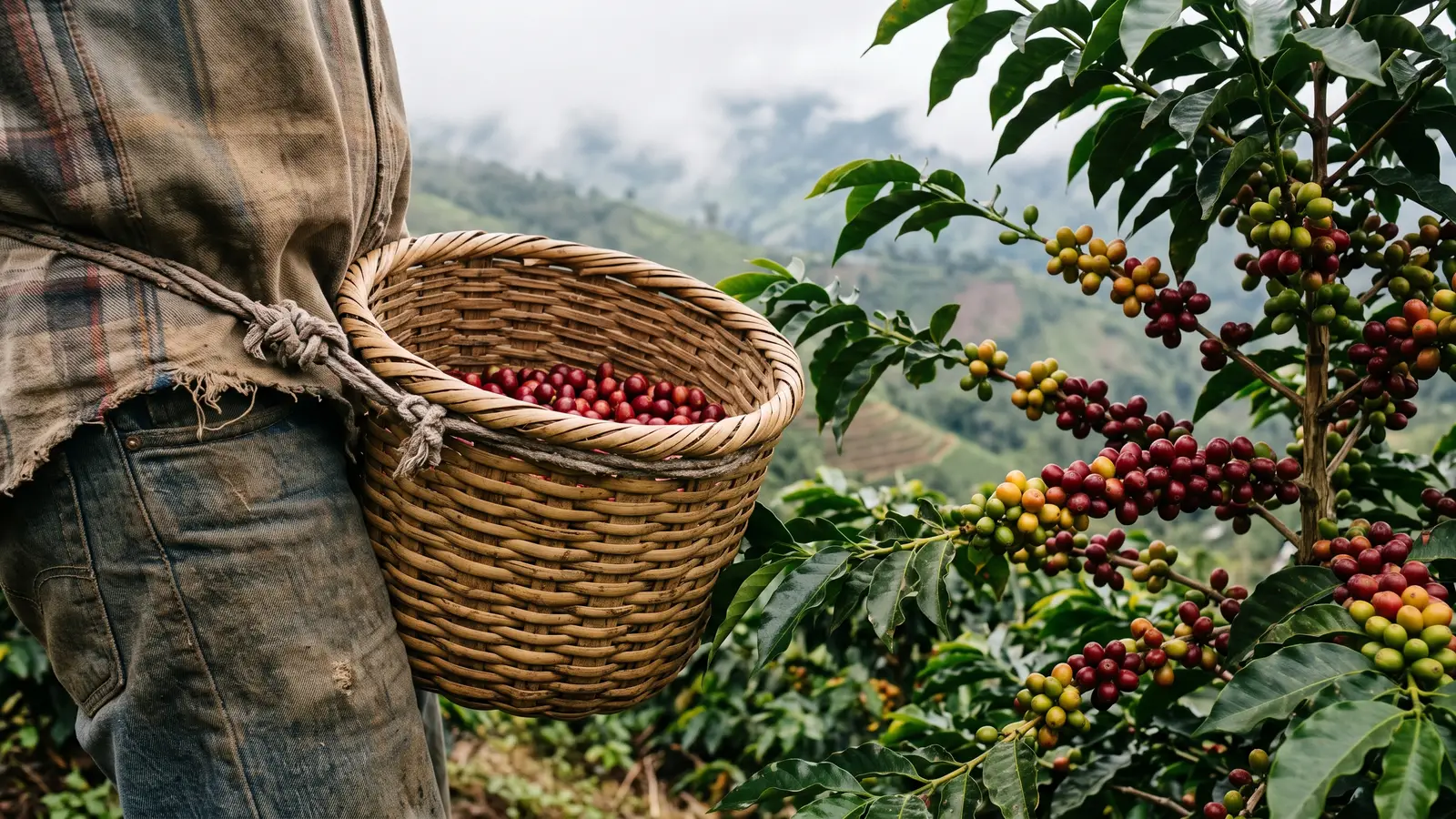
Picture a coffee slope in Caldas early in the harvest. The rows run uphill, steep enough that you'd lean into them as you walk. A picker works along a row with a basket at the waist, stopping at each branch to look before reaching for anything. The ripe red cherries go into the basket. The green and half-turned ones stay on the branch, because they aren't ready yet, and the picker will be back for them.
That is hand-picked coffee: people working the rows instead of machines, free to take the ripe cherries and leave the rest. It is where a good cup starts, because a coffee can only taste as good as the cherries it is made from.
Why not pick everything at once?
Because the cherries on one branch do not ripen together. You will find ripe, half-turned and green ones side by side, and only the ripe ones have developed their full sweetness. Pick one too early and the cup can turn sharp, grassy and a little rough on the tongue. Pick it too late and it can take on a ferment-like edge.
Everything that happens later has to work with what the picker chose.
Going back again and again
Since cherries ripen unevenly, selective picking goes back over the same plants several times in a season, taking only what is ready and leaving the rest to ripen. Stripping a branch in one pass is faster, by hand or by machine, but it takes the ripe and the unripe together.
The slow way is skilled work, and on these hillsides it's tiring too. The rows climb ground too steep for harvesting machines, so the cherries come down the slope in baskets and sacks. When harvest season arrives in Colombia's coffee country, pickers come to the farms and the whole year takes its rhythm from it, as we wrote in our post on the Zona Cafetera.
What comes after the basket
From there, the path depends on the coffee. A washed coffee loses its fruit soon after picking, and a natural dries inside its cherry; our washed or natural post walks through both. Either way, it all begins with the cherries that were picked, which is why the harvest is one of the first places a coffee's quality is decided.
Every one of our coffees is picked by hand, ripe cherries only, and you can see where they grow on our pages for Caldas and Nariño. Pour the Chinchiná Harmony Roast on an everyday morning or Caldas Geisha Harmony on a morning worth slowing down for, and you are tasting the same careful start: one ripe cherry at a time, chosen by someone who knew which ones to leave.