Washed or Natural: How Processing Shapes a Colombian Coffee
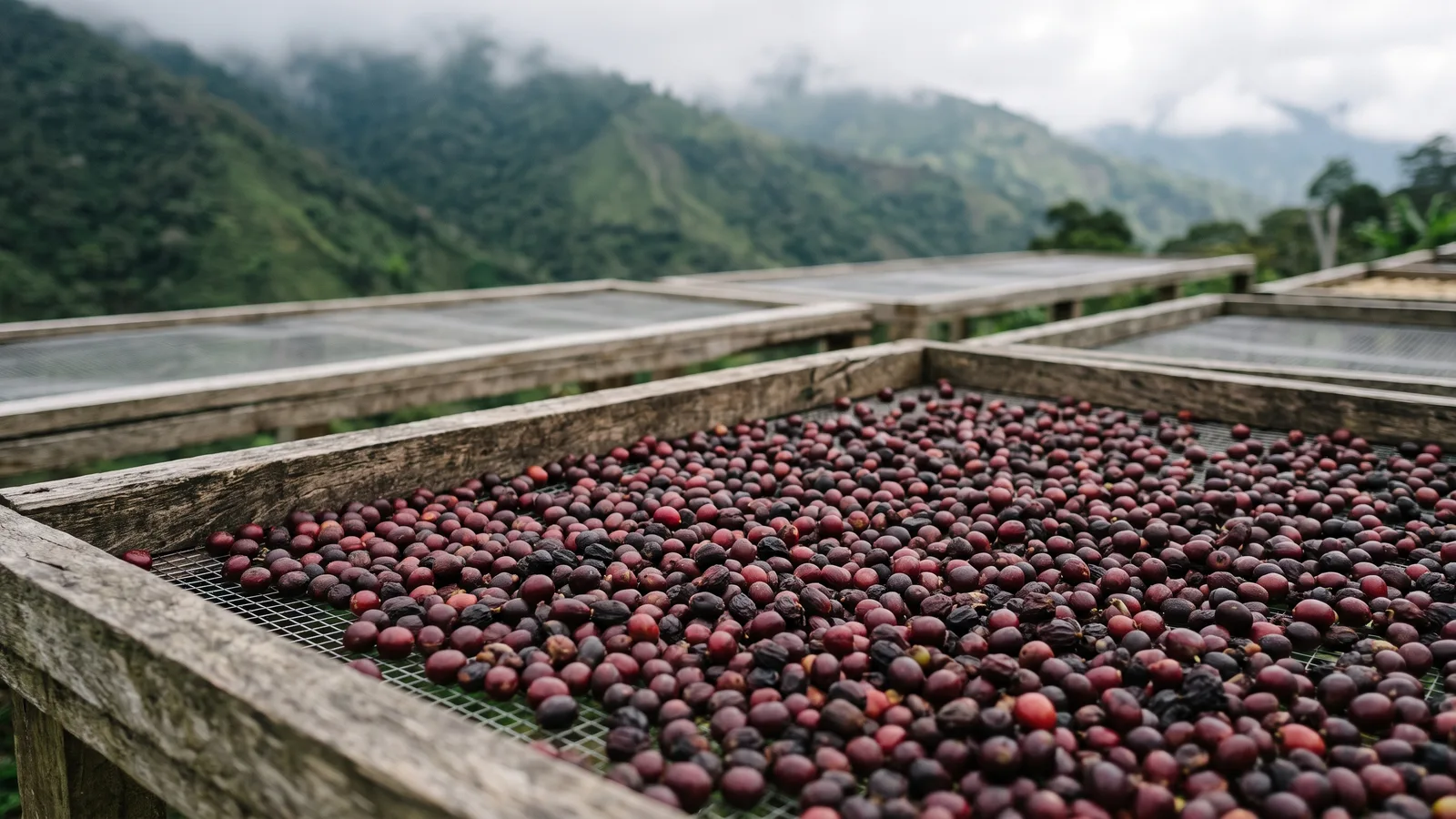
A coffee bean is the seed of a cherry, and processing is how the fruit comes away from it. In a washed coffee, the fruit is stripped off first and the seed is dried clean; in a natural coffee, the whole cherry dries with the seed inside, and the fruit is removed only at the end. Washed coffees tend to taste clearer and brighter, naturals sweeter and fuller, and four of our five coffees are washed while Tropical Dulce Dream is natural.
What happens in a washed coffee
The ripe cherries are pulped soon after picking, which takes off the skin and most of the fruit. A sticky layer of fruit still clings to the seed, so the coffee rests, usually in tanks, until that layer loosens, and is then rinsed in clean water. Only then is it laid out to dry.
Because the fruit is gone before drying, little of it reaches the cup. What tends to come through is the coffee itself and the place it grew: a clean structure, a clear acidity, and notes that stay distinct from one another.
What happens in a natural coffee
A natural coffee skips the pulping. The whole cherry is spread out to dry, skin and fruit intact, and is turned often so it dries evenly. Over the weeks this takes, the fruit shrivels around the seed, and only when it is fully dry is the hard husk milled away.
The seed spends that whole time inside its fruit, and the cup usually shows it: more sweetness, more weight, and fruit notes that a washed coffee would not carry. Done carelessly, the long drying can leave a ferment-like edge, which is why naturals take patience and close attention.
Our coffees, by process
Washed: the Chinchiná Harmony Roast, Caldas Geisha Harmony, Caldas Serenity Now and Nariño Sweet Symphony. In each, the washed process lets the coffee's own character show: the bright acidity of the Chinchiná, the Geisha's chamomile and juicy citrus, the herbal undertones of the Serenity and the deep sweetness of the Nariño.
Natural: Tropical Dulce Dream. Its coconut and caramel are tasting notes, not added flavors; drying in the whole cherry tends to bring sweetness forward, and here it sits over a substantial body.
Tasting the difference
Brew a washed coffee and a natural the same way, one after the other: the Chinchiná Harmony Roast and Tropical Dulce Dream, both from Caldas, make a useful pair. Use one recipe from our brewing guide for both, and taste them as they cool. Look for where the sweetness sits, how heavy each cup feels, and how clearly the acidity stands out.
Processing is only one of the things that shape a cup; the place, the variety and the roast matter as much. For how origin works, read what single-origin means, or see the questions and answers for a short version of each.