Tinto: Colombia's Everyday Cup of Coffee
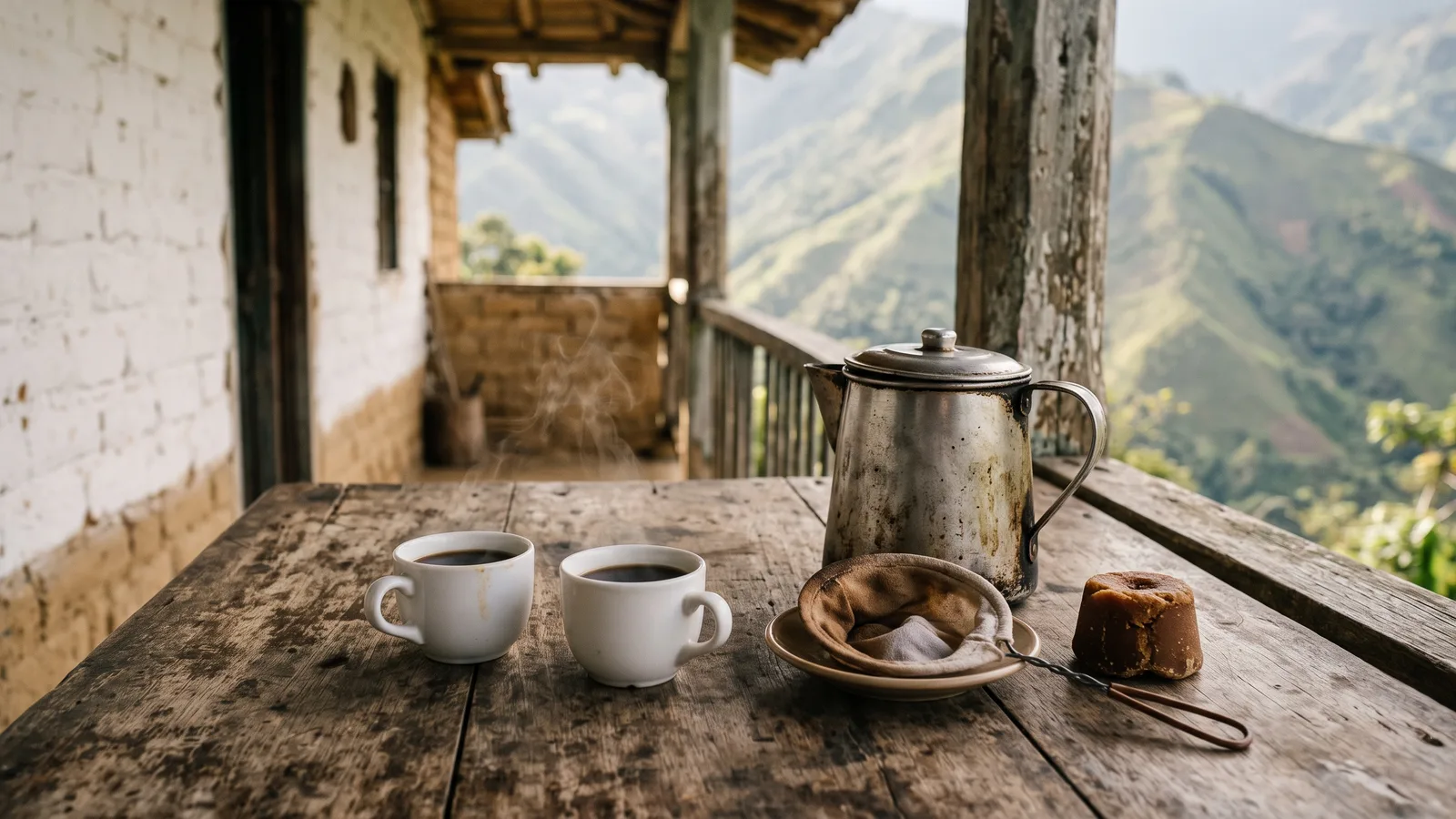
In Colombia, a tinto is a small cup of black coffee, the everyday coffee of the country. It is offered to guests, poured from thermoses on street corners and drunk at any hour, often sweetened. Ask for a tinto anywhere in Colombia and that is what arrives: no milk, a modest cup, and an invitation to stop for a moment.
What the word means
"Tinto" means dyed or inked, from the Spanish teñir, to dye. In Spain the word usually means red wine, so asking for un tinto in Madrid and in Manizales brings two different drinks. In Colombia, it is the coffee: dark in the cup, and simple.
A cup for every hour
A tinto is less a drink than a habit. It starts the morning, follows lunch, keeps a long afternoon going, and is the first thing offered to someone who walks into a home or an office. In towns and cities, vendors known as tinteros carry thermoses and small cups through markets and along busy streets, so a tinto is never far away.
Because it is a gesture as much as a coffee, a tinto is usually small. Accepting one is a way of saying yes to a conversation.
How a tinto is made
At home, a tinto is often brewed with a cloth filter, a colador, shaped like a small sock on a wire handle. Ground coffee goes into the cloth, hot water is poured through it, and the coffee runs into a pot below. Some households simmer the grounds with the water and strain them instead. It is frequently sweetened, with sugar or with panela, unrefined cane sugar, and in many homes the panela is dissolved in the water before the coffee goes in.
A traditional tinto is usually made with ordinary coffee from the home market and brewed simply, often thin and sweet. There is no single recipe: each house has its own.
A tinto with Kukuwu coffee
A tinto does not have to be made with ordinary coffee. With a good one, it becomes a small, clear cup with real character. The daily coffee of our range, the Chinchiná Harmony Roast, suits it best: its bright acidity and pronounced sweetness carry a small cup, black or lightly sweetened. For a naturally sweet cup, Tropical Dulce Dream has tasting notes of coconut and caramel.
For the method, a paper pour-over is the nearest everyday equivalent to a cloth colador, with a cleaner cup; our brewing guide has the recipe. Serve it in small cups, and offer the first one to whoever is with you. That is the part of the tinto that matters most.
Our coffees grow in Caldas and Nariño; the questions and answers cover the rest.