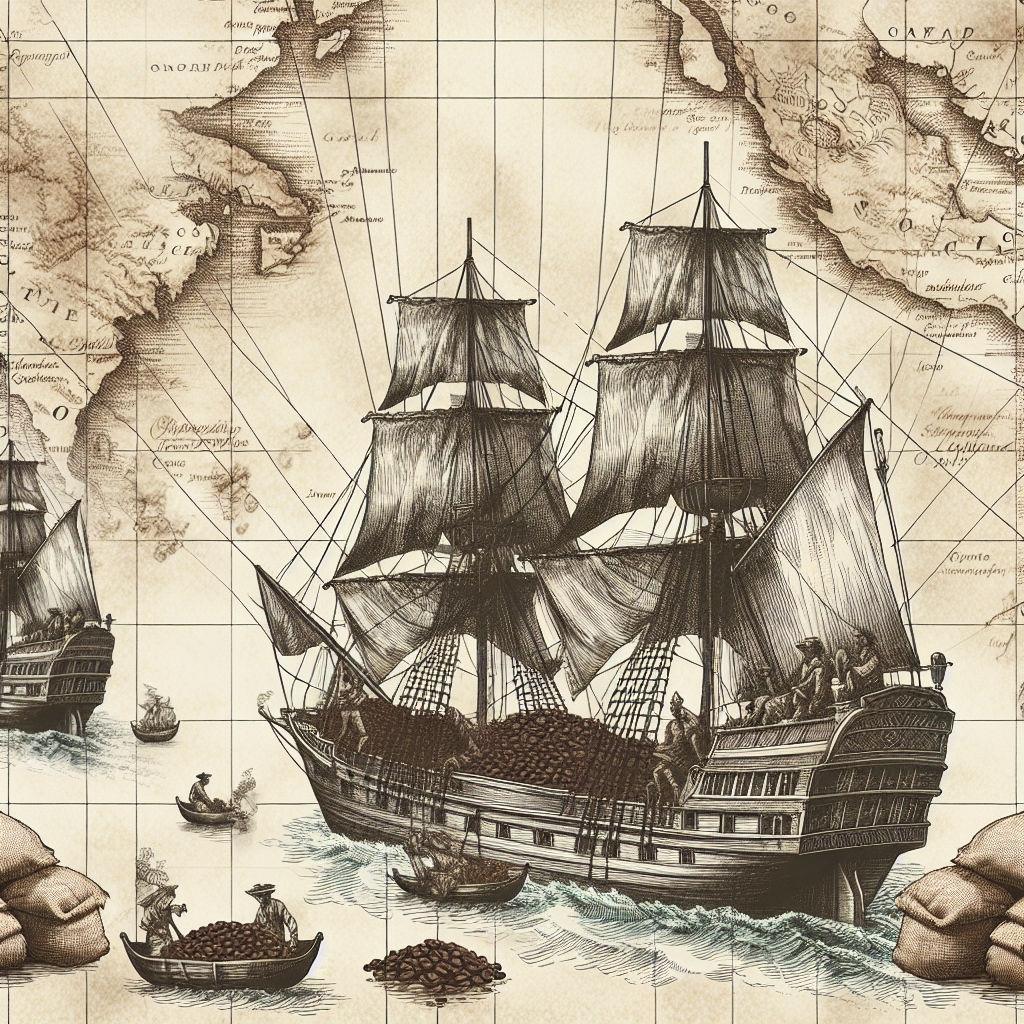
Historical Export Routes: Essential Paths That Shaped Coffee Trade
The story of coffee is not just about its rich aroma or energizing effects; it is also deeply intertwined with the trade routes that facilitated its journey across continents. Historical export routes played a crucial role in shaping the global coffee market, connecting producing regions with eager consumers worldwide. Understanding these trade pathways offers insights into how coffee evolved from a local commodity into an international cultural staple.
The Origins of Coffee and Early Trade Routes
Coffee’s origins trace back to the Ethiopian highlands, where legend attributes the discovery to a goat herder named Kaldi in the 9th century. From Ethiopia, coffee spread to the Arabian Peninsula. Yemen, in particular, became a central hub for early coffee cultivation and export.
The Red Sea trade routes were among the first to facilitate coffee’s movement. Yemeni merchants shipped coffee beans through the port of Mocha, from which the term “mocha coffee” derives. These routes connected the Arabian Peninsula to key trading centers in the Middle East, North Africa, and eventually Europe.
The Spice Route and Coffee’s Expansion into Europe
The famous Spice Route of the 15th and 16th centuries was vital for coffee’s expansion. This network linked Asia, the Middle East, and Europe via both sea and land paths. Coffee was introduced to European markets mainly through Venetian merchants who traded extensively in the Mediterranean.
Venice’s strategic position allowed it to become one of the first European cities to embrace coffee, initiating its popularity across the continent. The export pathways along the Mediterranean Sea, combined with overland caravan routes, were instrumental in expanding coffee’s reach.
The Dutch and Portuguese Influence: Establishing Plantations
The Dutch and Portuguese were pivotal in transplanting coffee cultivation to tropical colonies in Asia, the Americas, and Africa. This expanded coffee’s production beyond its original regions and created new export routes.
The Dutch managed to cultivate coffee in Java (Indonesia), using maritime routes to export beans back to Europe. Similarly, the Portuguese introduced coffee to Brazil in the 18th century, which would later become the world’s largest coffee producer.
The Atlantic Ocean became a major artery for coffee trade, transporting beans from South America to European ports like Lisbon, Rotterdam, and later London. These oceanic routes were essential for turning coffee into a mass-export commodity.
The Transatlantic Trade and Coffee’s Global Dominance
The transatlantic export routes connected the Americas with Europe and Africa, enabling large-scale coffee exports. Brazil, along with other countries like Colombia and Haiti, developed robust coffee industries that relied heavily on these maritime paths.
During the 19th century, steamships shortened transatlantic journeys, increasing the volume and reliability of coffee exports. Ports such as New Orleans and Liverpool became bustling centers for coffee trade.
This era also saw the advent of specialized transportation infrastructure such as railways and canals within producing countries to move coffee from plantations to export ports efficiently.
The Role of the Suez Canal and Modern Trade Routes
The opening of the Suez Canal in 1869 revolutionized coffee export routes by providing a more direct passage from Asia and East Africa to Europe. This dramatically reduced shipping times compared to the longer route around the Cape of Good Hope.
Coffee producers in East Africa and Asia benefited from this development, as their products reached European markets faster and fresher. The Suez Canal remains a pivotal route in the modern coffee supply chain.
Actionable Insights for Understanding Coffee’s Trade Evolution
– Geographic Impact: Coffee’s spread depended heavily on access to navigable waterways and strategic ports, emphasizing the importance of maritime routes overland during historic periods.
– Colonial Influence: The global distribution of coffee cultivation largely mirrors the colonial powers’ auction of trade posts and territories, which shaped where coffee was grown and how it was exported.
– Technological Advances: Innovations like steamships and canals revolutionized old trading routes, increasing the volume and reliability of coffee trade and making it accessible to new markets.
– Modern Implications: Understanding these historical pathways can help appreciate the complex logistics behind today’s coffee supply chains and the significance of maintaining efficient, sustainable export routes.
Conclusion
Historical export routes were fundamental in transforming coffee from a local curiosity into a global commodity. From the early maritime paths of the Red Sea and Mediterranean to the transatlantic shipments and the strategic Suez Canal, these essential paths shaped coffee’s trade dynamics and availability worldwide. Today, the legacy of these routes continues to influence how the coffee industry operates, reminding us of the intricate relationship between geography, technology, and commerce in the global history of coffee.